
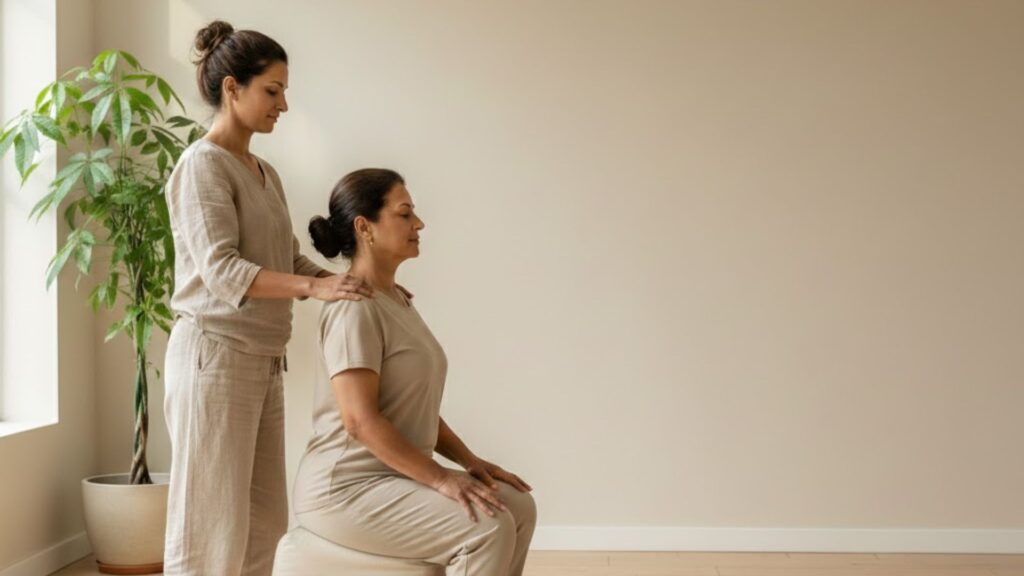
Knee pain does not usually come suddenly. It slowly becomes part of daily life. First, you feel slight discomfort while climbing stairs. Then you start avoiding long walks. Slowly, even getting up from a chair feels heavy. Many people think, “Maybe this is normal after 35… maybe this is age.” But in many cases, it is not just age. It is weakness, stiffness, and lack of correct movement. This is where yoga for knee pain and gentle knee strengthening exercises can make a real difference by helping the body move safely and confidently again
The good news is this — your knees are not damaged forever. In many cases, they just need support. Stronger muscles. Better posture. Safe exercises. Not aggressive exercise. Not painful stretching. Just gentle and steady practice that helps your knees feel stronger and more stable again.
Why Knee Pain Is So Common

Today most of us sit too much. Office work, driving, watching TV, using mobile phones — we sit for long hours. When we sit too much, our thigh muscles become weak. Our hips become tight. When that happens, the knees start taking extra pressure.
Think of your knee like a bridge. If the pillars on both sides are weak, the bridge carries too much load. The knee is that bridge.
Sometimes we also stop moving because of fear. We think, “If I move, it will hurt more.” But complete rest for a long time can make joints more stiff. The key is safe movement, not no movement.
How Yoga Helps Knee Pain
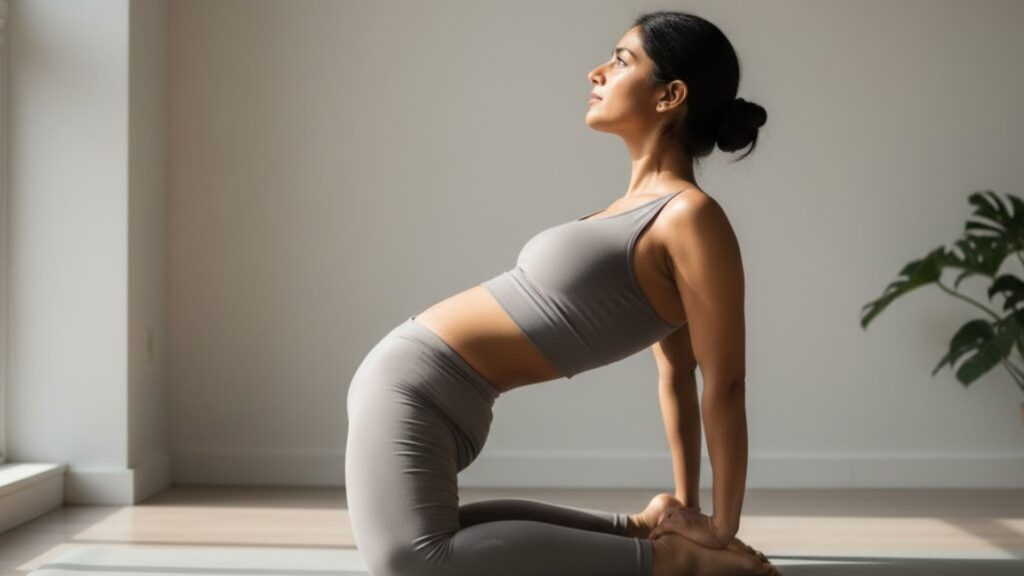
Yoga helps by strengthening the muscles around the knee. It also improves balance and posture. When muscles around the knee become stronger, the joint does not feel so stressed.
In yoga for knee pain, movements are slow. There is no jumping. No sudden bending. You learn how to move with control. You also learn how to breathe properly during movement. When breathing improves, the body relaxes. When the body relaxes, joints move more smoothly.
Over time, many people feel less stiffness. Walking becomes easier. Even standing for a longer time feels better. It does not happen in one day. But with regular practice, the improvement is real.
Common Reasons for Knee Pain
There are many reasons why knee pain happens. Some of the common ones are:
- Weak thigh muscles
- Tight leg muscles
- Long sitting hours
- Poor posture while standing or walking
- Extra body weight
- Old minor injuries
Sometimes knee pain can also be due to medical conditions like arthritis. That is why it is always good to check with a doctor if pain is severe or does not reduce.
But for many people, the main problem is lifestyle. And lifestyle can be improved with simple changes.
Simple Yoga Movements That Help
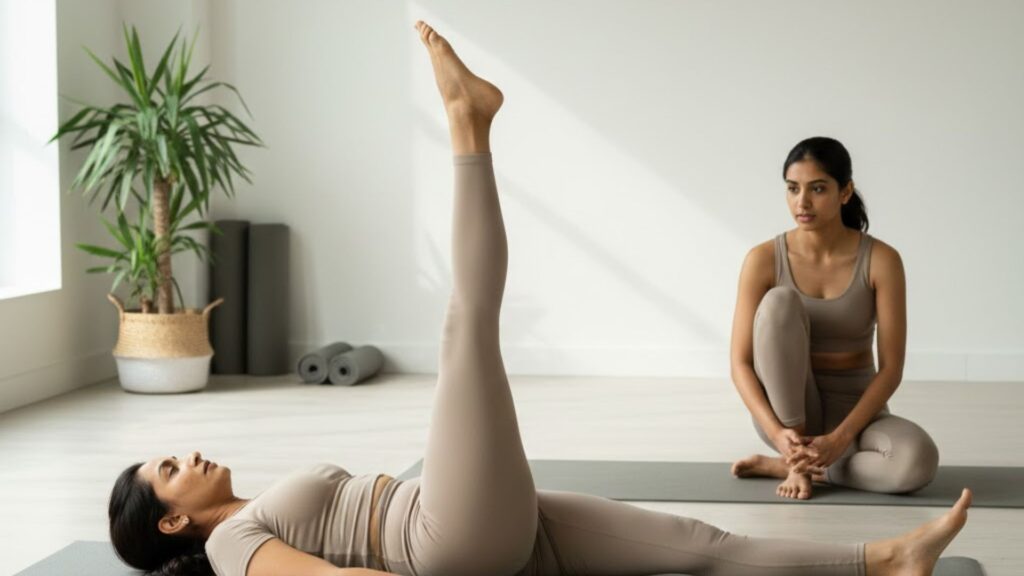
When practicing yoga for knee pain, we focus on safe and gentle movements. These exercises do not put too much pressure on the knee.
Some helpful movements include:
- Wall-supported chair pose – helps strengthen thigh muscles
- Bridge pose – strengthens back of legs and hips
- Straight leg raises – builds front thigh strength
- Supported warrior pose – improves balance and leg strength
- Ankle rotations – improves joint support
Always move slowly. If you feel sharp pain, stop. Mild muscle effort is normal. But joint pain is not something to ignore.
And remember — deeper is not better. If someone else bends more, that does not mean you should. This is not a competition. Your knees do not care about competition.
What to Avoid If You Have Knee Pain
While yoga is helpful, some movements should be avoided when you have knee pain.
Avoid:
- Deep squats without support
- Fast transitions
- Jumping movements
- Forcing cross-legged sitting
- Twisting the knee in strange angles
Sometimes people see advanced yoga videos online and try to copy. That is like watching a professional cricketer and trying the same shot on day one. It may not end well.
Always choose safety over ego.
How Often Should You Practice?
One yoga session will not remove knee pain completely. Think of it like brushing your teeth. You cannot brush once and expect lifelong cleanliness.
Consistency is important.
Practicing yoga for knee pain 3 to 4 times per week is usually enough. Even 30 minutes per session can bring change. The key is regular practice.
After 3 to 4 weeks, many people notice:
- Less stiffness in the morning
- Easier stair climbing
- Better balance
- More confidence while walking
Small changes add up. Do not expect miracle results in one week. But expect steady improvement with time.
Why Breathing Is Important
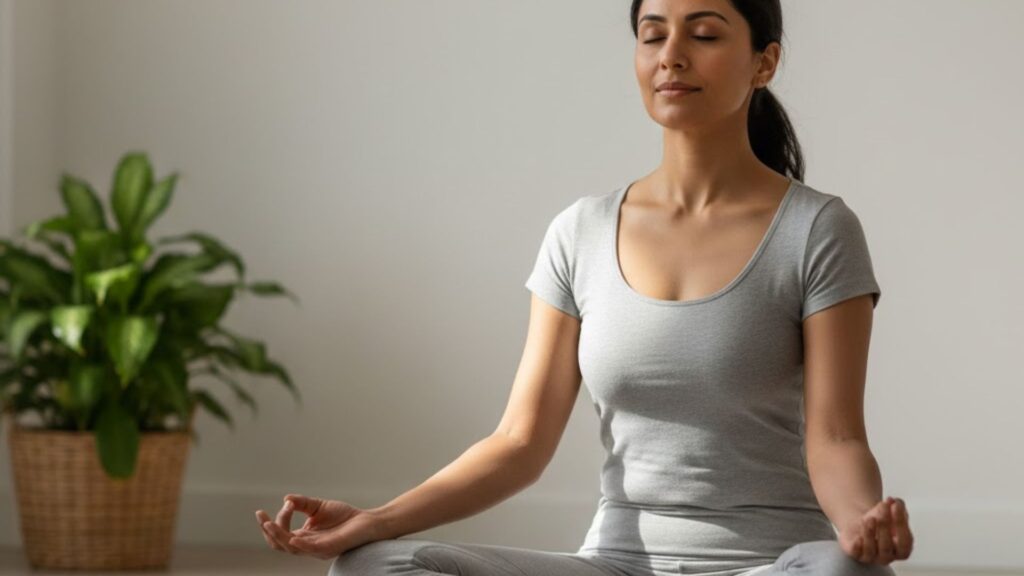
You may wonder, “What does breathing have to do with my knee?”
Actually, it matters a lot.
When we are in pain, our body becomes tight. We breathe shallow. Muscles stay tense. This increases pressure on joints.
Simple breathing techniques calm the nervous system. When the nervous system relaxes, muscles also relax. When muscles relax, joints move better.
Try this small exercise. Sit comfortably and take 5 slow deep breaths. Notice how your shoulders relax. Now imagine doing a gentle leg exercise with that same relaxed breathing. It feels smoother.
Breathing is like oil for your body. It reduces friction.
When to Be Careful
Yoga for knee pain is helpful in many cases. But if you have:
- Severe swelling
- Sudden injury
- Sharp pain
- Instability while walking
Please consult a doctor first.
Yoga supports recovery. It does not replace medical treatment for serious injuries.
Also, mild muscle soreness in the beginning is normal. It means muscles are waking up. But strong joint pain is not normal.
Listen to your body. It always gives signals.
Final Thoughts

If knee pain is slowly changing your daily life, do not ignore it. Do not accept it as “normal age problem.” Many times, it is simply a sign that your body needs better support.
Yoga for knee pain is not about becoming flexible. It is about becoming stable. It is about moving with confidence again.
Start slowly. Practice regularly. Be patient.
Your goal is simple:
Walk comfortably.
Climb stairs without fear.
Stand without discomfort.
Your knees have supported you for many years. With proper care, they can continue to support you for many more.
I had also been going through one of the posts by maxhealthcare that talks about exact yoga postures. You may want to take a look at it if you are interested by clicking here.
For more of our services, click here to explore.
Hi, this blog is good. Very informational.